
Root Cause Analysis Tools: Correct operational inefficiency and failures
About Course
Tools to permanently eliminate operational inefficiency and failures
The participant will go beyond the concepts and tools of Root Cause Analysis (RCA), to apply the lessons learned to his own context of operation, through workshops especially designed to self appropriate the fundamental principles;
– to systematically recognize anomalies,
– to prioritize anomalies in order to treat them accordingly,
– to implement a process and mobilizing tools, easy to use for the workforce,
– to permanently eliminate operational inefficiency and failures.
This training is for people involved or having an interest in the management of physical assets, operational excellence or maintenance engineering, and looking for a new perspective.
Methodology: Through presentations, workshops promoting exchange and analysis exercises, the participant becomes familiar with the concepts of root cause analysis, so that he can implement it in a sustainable process.
• Presentations (40%), analysis exercises (60%)
Outcome: The participant is equipped with analysis tools and understands their implementation in a process to prioritize anomalies. He acquires the knowledge to identify and definitively solve significant problems, using root cause analysis (RCA).
Content: This training session includes;
• 1 enthusiastic and passionate trainer who knows how to popularize to really transmit knowledge, tools, concepts and above all, know-how
• 11 lectures, each followed by a quiz to assess the knowledge learned and stimulate thinking
• 8 workshops, where the participant puts into practice the knowledge acquired in his own operational context
• 1 participant manual, including the full presentation, the P-CAM process, workshops, lists of failure modes, causes, remedies, detection methods and associated maintenance activities, definitions and references used
• 1 toolbox containing improvement axes and tools
• 1 toolbox containing analysis tools and methods for solving problems / anomalies / failures
• 1 template – Root cause analysis report
• 1 template – 5 whys analysis report
• 1 template – RCA Presentation of solutions
• 1 nominative certificate of participation
Quality assurance: Training review to be completed after the session.
Assessment of the knowledge acquired by the participant: Quiz with a passing score of 80%, following each lecture.
TRAINING OUTLINE / SYLLABUS
Dependability concepts (5%)
• Context and definitions
• Dependability (RAMS)
• Operational indicators
Anomaly analysis process (50%)
• Identify the anomaly
• Evaluate its consequences
• Optimize the asset management strategies
•Root cause analysis
•5 why analysis
• P-CAM process: The bigger picture
• Update the strategies
• Document management
Tools and methods of analysis (45%)
• Improve availability and maintainability
• Improvement tools and axis
• Targeting method and general analyzes
• Cause identification tools
• Failure analysis tools
Course Content
Introduction to the Performance-Centered Asset Management training – RCA tools
-
Introduction to the “Root Cause Analysis Tools; Correct operational inefficiency and failures” training
06:08
Dependability (RAMS)
Anomaly analyzes process
Root Cause Analysis
5 why analysis
Performance-Centered Asset Management process
Improvement axes and tools
Analysis tools and methods
Extra material
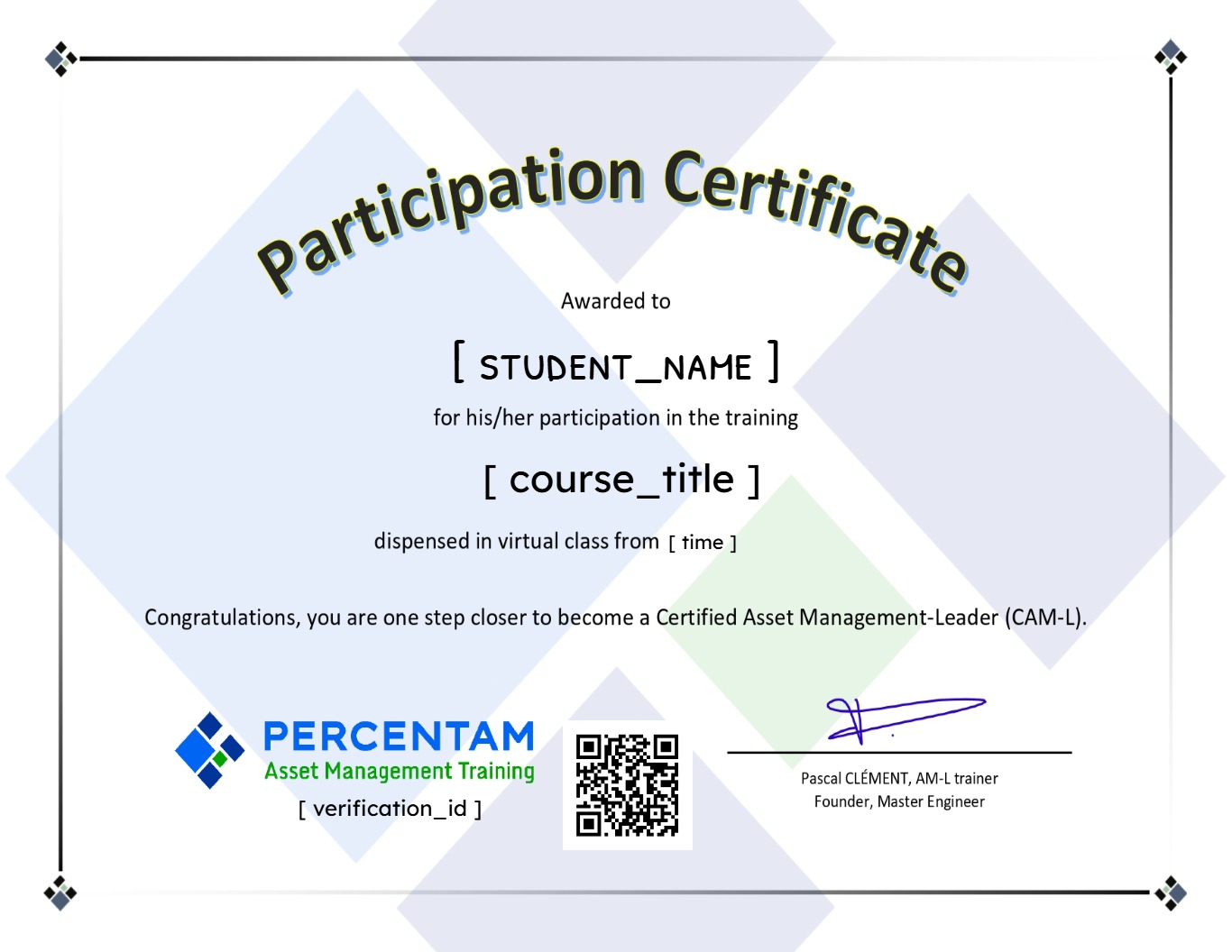
Earn a certificate
Add this certificate to your resume to demonstrate your skills & increase your chances of getting noticed.
Student Ratings & Reviews
This training provided practical knowledge that can be applied across maintenance, reliability, production, and asset management functions. The course highlighted the importance of structured investigations and continuous learning in achieving operational excellence.
The course provided a strong introduction to Root Cause Analysis and its role in continuous improvement. I particularly enjoyed learning how effective investigations can lead to long-term performance improvements.
The training offered valuable insights into systematic problem-solving. I appreciated the emphasis on data-driven decision-making and objective analysis rather than assumptions or personal opinions.
The content was well structured and easy to follow. The practical examples and case discussions made the concepts easy to understand, even when dealing with complex operational problems.
The training reinforced the idea that failures rarely occur because of a single event. Understanding the chain of contributing factors is essential for implementing effective corrective actions. The course explained this concept exceptionally well.
I would recommend this training to anyone responsible for solving operational problems. The methodologies presented help teams move beyond quick fixes and focus on sustainable solutions that address the true causes of issues.
This course demonstrated how Root Cause Analysis can improve both reliability and operational performance. The concepts were presented clearly, and the lessons provided practical value that can be applied immediately.
I found the course highly informative and relevant to my role. The Root Cause Analysis tools presented provide a practical framework for investigating failures and improving organizational learning.
The tools introduced during this course have already improved the way I conduct investigations. I now approach failures with a more structured methodology and a stronger focus on finding facts rather than opinions.
This course helped me move beyond reactive thinking. Instead of focusing only on what happened, I learned how to investigate why it happened and how to prevent it from happening again. That shift in mindset alone made the training worthwhile.
The course demonstrated how Root Cause Analysis contributes to reliability improvement and operational excellence. By identifying the factors behind failures, organizations can reduce downtime, improve performance, and avoid repeating the same mistakes.
I particularly enjoyed learning about the importance of asking the right questions during investigations. The course showed how deeper analysis often reveals causes that are not immediately obvious. This has improved my confidence when leading problem-solving activities.
This training provided a clear framework for identifying the underlying causes of operational issues. The examples used throughout the course helped demonstrate how Root Cause Analysis can be applied across different industries and situations.
One of the strengths of this training is its practical application. The course does not simply explain Root Cause Analysis concepts but shows how they can be applied to real operational challenges. The lessons were clear, engaging, and immediately useful.
I appreciated the focus on preventing recurrence rather than simply correcting immediate problems. The training reinforced the importance of understanding why failures occur and what actions are needed to prevent them in the future.
I found this course extremely valuable because it encouraged a more analytical approach to problem-solving. Instead of making assumptions, the training emphasized the importance of evidence, data, and systematic investigation. This approach leads to better decisions and more sustainable results.
As a maintenance engineer, I regularly deal with recurring equipment issues. This course helped me understand why some problems continue to reappear despite repeated corrective actions. The tools presented provide a disciplined way to identify and eliminate the true causes of failure.
This course taught me one of the most important lessons in industrial performance: fixing a problem is not the same as eliminating its cause. Before taking this training, many of our investigations focused on immediate failures. The course showed how Root Cause Analysis helps uncover the deeper issues that allow failures to occur in the first place.
The training provided a practical and structured approach to problem-solving. I particularly appreciated how the course demonstrated the difference between symptoms and root causes. This distinction alone has improved the quality of investigations within my team.